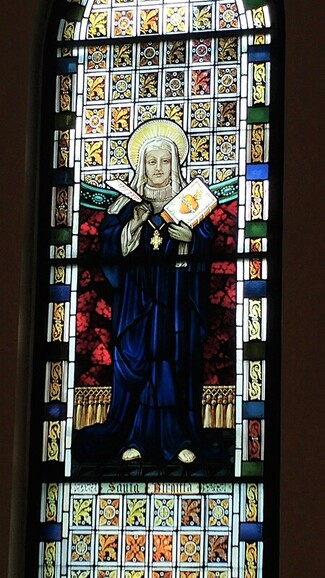
 Naantali, July 17, 2019 The religious expression of Catholicism means that a person is called to flourish in their vocation, whether it’s married life, religious life, or the priesthood. And in each of these vocations, the person is called to live their full spiritual potential -- the perfection for which God has created them: holiness. Monastic life has flourished as centres of learning and sanctification. One such Order was founded by the Bridget of Sweden who founded the Order of the Most Holy Saviour also known as the Bridgettines in 1344. The Bridgettines received their approval by Pope Urban V in 1370. The Order flourished of monks and nuns attached to the same Abbess sharing monastic grounds separated by their cloisters. The Abbess elected by the nuns and monks governed the monastery. These abbesses were well-educated women and had the gift of courage to lead and govern. Bridgettine spirituality was embraced by the local people and penetrated their lives placing Christ at the center following the visions of Bridget. Monasteries opened across the Nordic countries and in her own lifetime Bridget was known for her communion with God; pilgrims visited her for prayers, intercession, guidance. The Lutheran reformers, instead, viewed these independent monasteries as incompatible with the narrow reformist doctrines, but also as an opportunity to acquire significant monastic assets. Instructed by Genesis (1:28), and Luther’s De Votis Monasticis “On Monastic Vows,” the Lutheran reformers argued the woman’s God-given duty was to marry and bear children, supporting Luther’s position on the uselessness of religious life. With Lutheran teaching dominating the Swedish reformers who imposed themselves on devout Roman Catholics, Swedish or Finn, the Reformers were determined to bring an end to monastic life. The cloistered Bridgettine nuns established an abbey at Naantali in Finland not far from Turku which included a separate monastery for monks, lost its property to the Swedish crown in 1544. The Lutheran Bishop, Mikael Agricola, pressured the monastic community to become Lutherans. The Bridgettines, however, lived according to their vows of obedience, poverty and chastity, a life detached from the world. The beautiful relief still present in the Naantali Abbey Church displays Father, Son, and Holy Spirit with the Coronation of Mary at the centre, the expression of the Roman Catholic faith lived out in monastic life, the Holy Spirit at work in their lives. For the Reformers it was in their political interest to eradicate Catholicism. But one prominent Lutheran, Queen Christina of Sweden, abdicated from her throne to become a Roman Catholic; she understood one cannot reduce the Scripture to Luther’s rigid interpretation. The former Queen of Sweden brilliantly grasped that in Catholicism not only was there a place for celibacy, but celibacy was valued because Jesus Christ was the model.
It was not until the 1923s that Catholicism finally enjoyed legal status in Finland although the law still prohibited monasteries; the earlier Roman Catholic faith of the Finns after four and half centuries was no longer prohibited. After fourth centuries the Bridgettine Sisters returned in 1986 establishing themselves in Turku with their guest house, and an adjacent parish, St. Bridget and Blessed Hemming. At the entrance of their convent are the words of the Swedish mystic, Saint Bridget, “Amor Meus Crucifixus est.” My love is the Crucified. In this Finnish city we arrived on time for Adoration.
0 Comments
Your comment will be posted after it is approved.
Leave a Reply. |
AuthorFr. David Bellusci, O.P. List by Titles
Archives
May 2023
Categories
All
|
 RSS Feed